Voice AI has not yet had its ChatGPT moment, according to executives working at the heart of the sector. Despite billions of dollars flowing into voice startups and a steady stream of new models that claim to sound human, the technology still breaks down in ways users notice immediately.
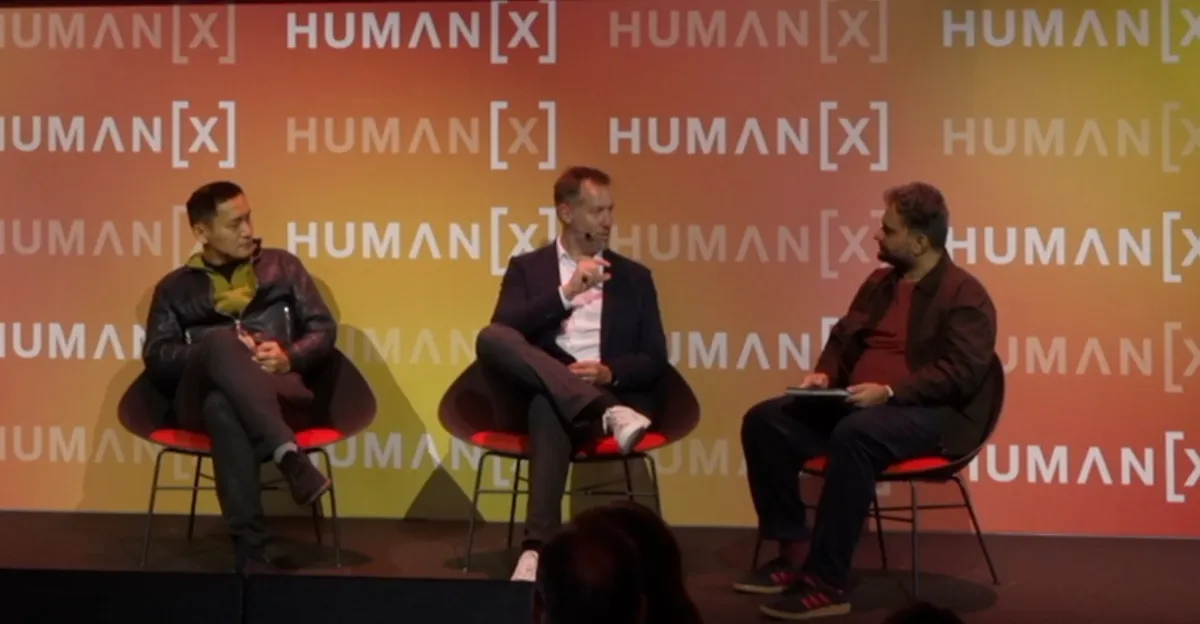
Speaking at the HumanX conference, PolyAI CTO Shawn Wen and Otter CMO Alex Gay argued that the missing pieces are fast reasoning, reliable context and accurate transcription. Until those improve, they say, voice agents will keep losing the trust of the people they are meant to help.
Full-duplex models are only the first step
Wen acknowledged that the industry has already reached the milestone of full-duplex models, which can listen and speak at the same time. In his view, the next challenge is making reasoning fast enough that answers arrive quickly and conversation feels natural.
He added that customer service agents must avoid sounding robotic and must give callers confidence that their problem will actually be solved. Once a caller engages for the first two or three turns, that confidence starts to build, and they may no longer feel the need to ask for a human.
Why voice AI pipelines keep breaking
Gay said Otter treats transcription as a starting layer rather than the end goal, because everything that follows depends on it. If the original transcript is inaccurate, every summary and follow-up action built on top of it is flawed, and users quickly lose trust in the platform.
Wen pointed to automatic speech recognition as a frequent weak point, noting that ASR models often miss important keywords and therefore fail to capture the whole context. Gay agreed that language remains an area where voice models still need significant improvement.
Otter is also working on digital twins that could represent people in meetings. Gay said such an avatar must reproduce the emotive expressions of talking to a human, otherwise the experience is just a question-and-answer chatbot rather than a real relationship.