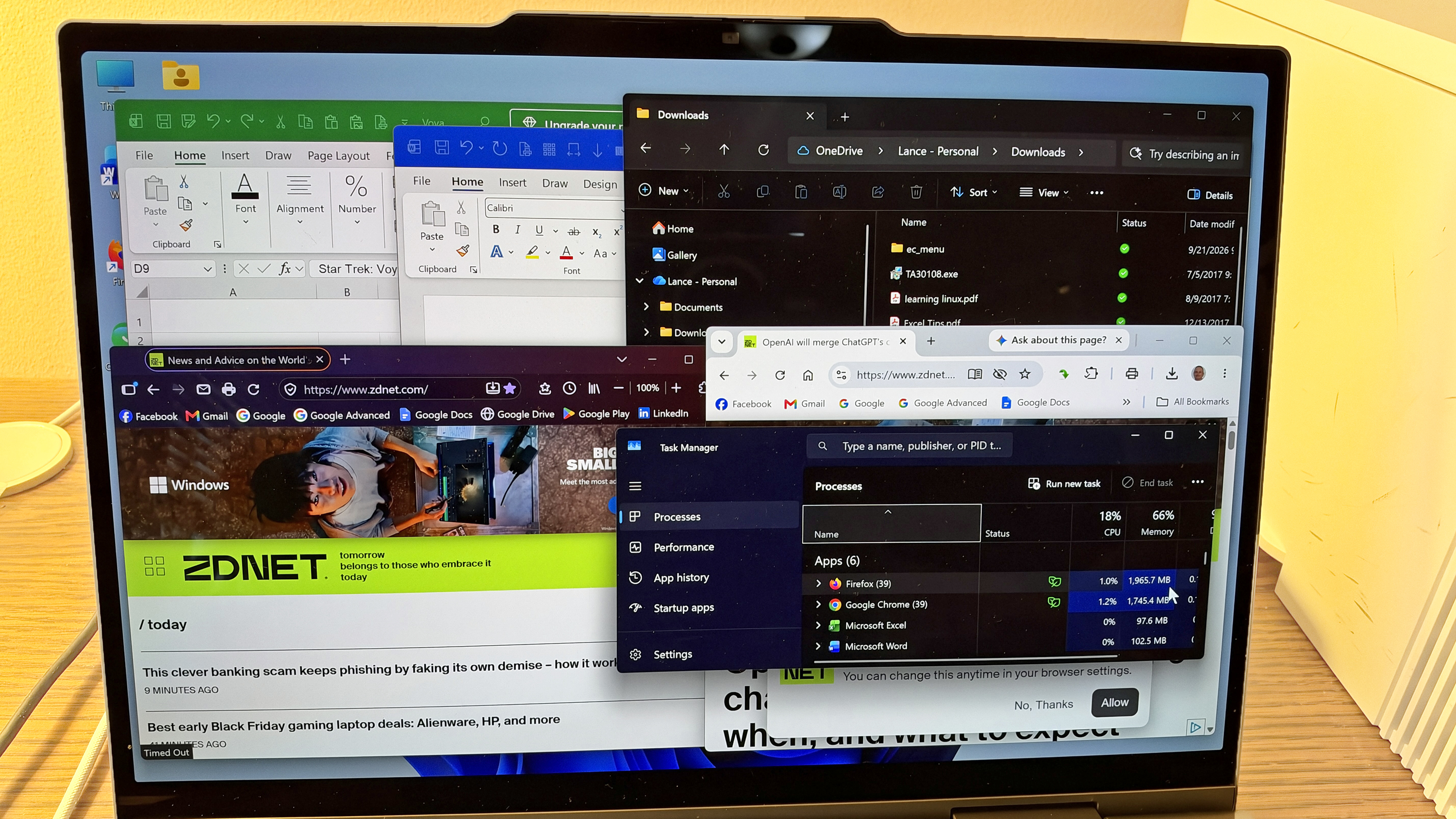
Microsoft has detailed how its latest Windows 11 updates improve performance on PCs with only 8GB of RAM, claiming up to 20% better responsiveness and 40% faster multitasking in its own lab tests. The company outlined the gains in a blog post this week, as reported by ZDNET and Engadget.
The improvements arrive with the Windows 11 26H2 build (version 26300.9818 or later) and focus on making everyday tasks feel snappier on budget and mid-range machines. Microsoft says the changes help systems with 8GB of memory keep pace with heavier workloads, even though 16GB or more is still recommended for demanding creative work.
How Windows 11 26H2 speeds up 8GB PCs
At the heart of the update is smarter memory management. Windows now keeps up to 2GB more of your active data in RAM instead of swapping it to slower storage, so apps and browser tabs are less likely to reload when you return to them. Microsoft says it has fine-tuned its long-standing memory compression to decide how much to compress, when to move data to disk, and when to fetch it back.
The company also prioritizes tasks that need to feel instant—opening the Start menu, launching File Explorer, right-clicking, and searching—while backing off background work like search indexing. According to Microsoft, these interactions are up to 20% more responsive than the January 2026 version of Windows 11.
- Up to 20% more responsive system interactions (Start, File Explorer, Settings, search, right-click)
- Up to 40% faster multitasking in lab tests (20 Edge tabs, 4K video, Office files)
- Up to 2GB more active data kept in RAM