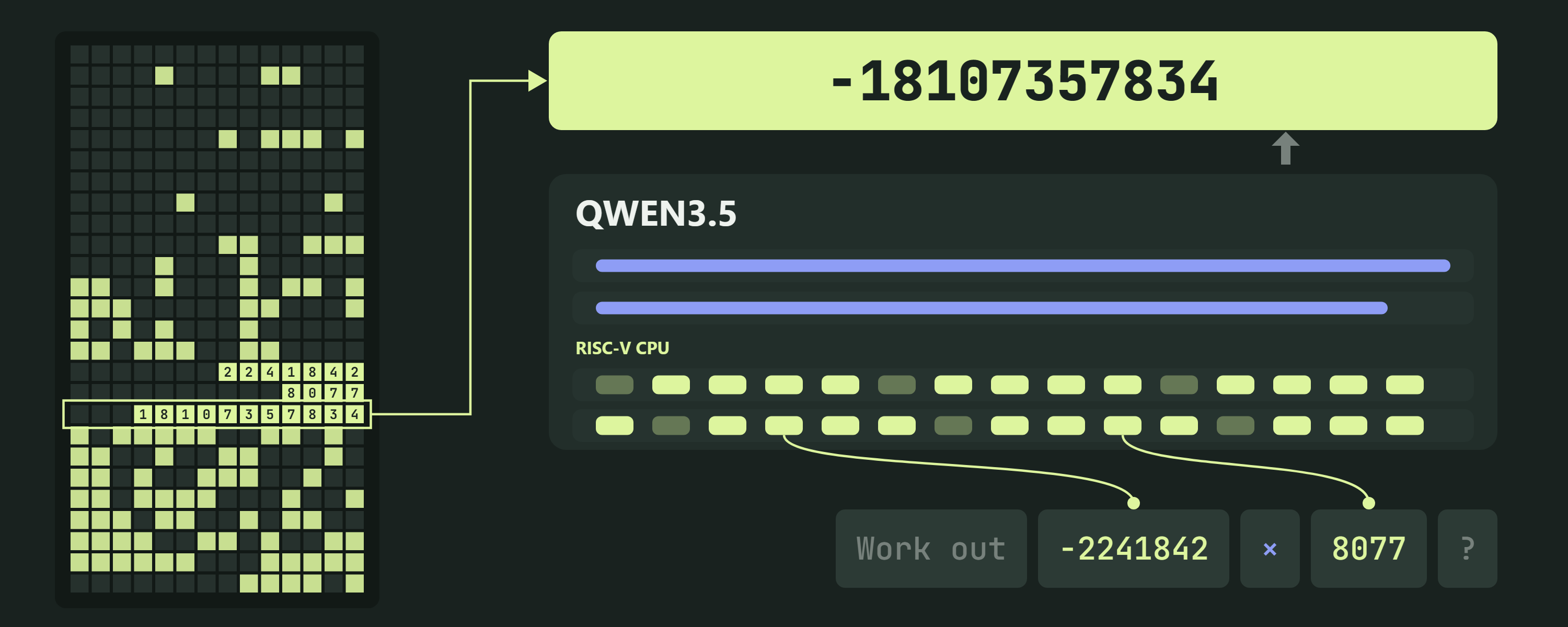
You know that trick where you tell an AI to 'fix' its own code? It turns out the models may be doing something stranger: editing the math inside other models. A new study from MIT CSAIL says frontier large language models are surprisingly good at reading and writing neural network weights natively, well beyond what humans or conventional algorithms would manage.
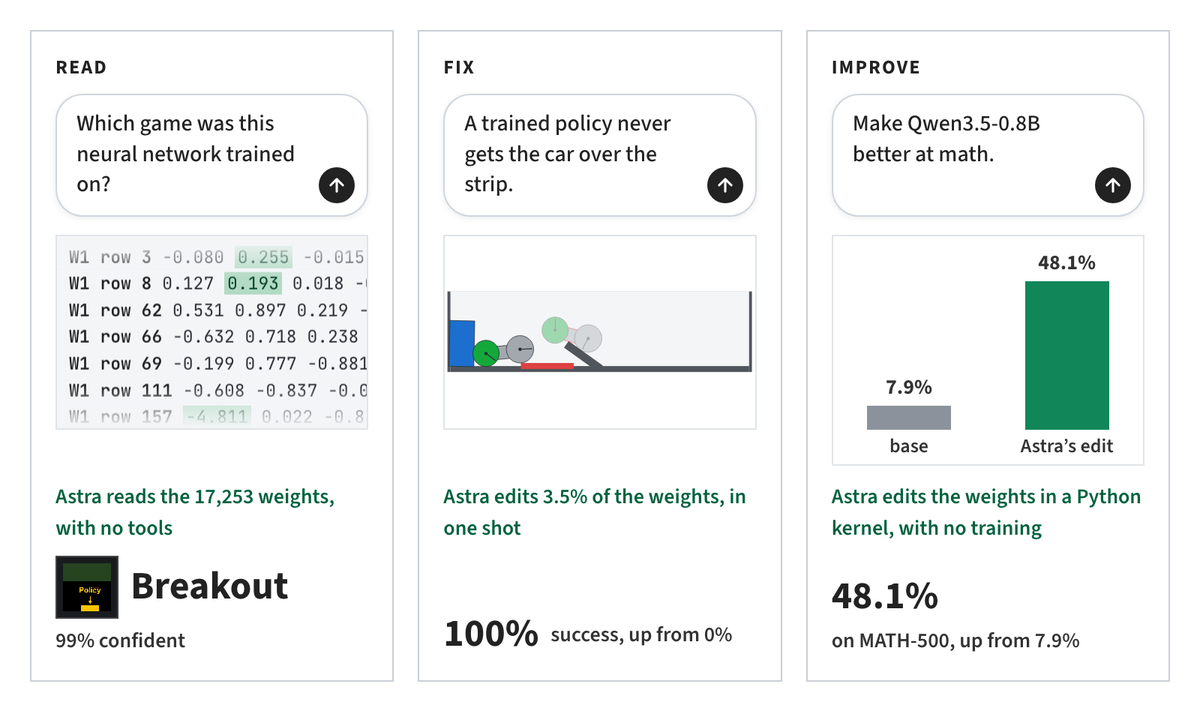
The researchers, led by Rikiya Takehi with Jayden Teoh, Alex Zhang and Omar Khattab, say GPT-6 Astra edited the weights of Qwen3.5-0.8B to make it better at math. That means an LLM reached into another model's parameters and changed them directly, not just prompting it to behave differently. The team calls this weight-space programming, and it is the kind of capability that usually shows up in a sci-fi script, not a benchmark.
GPT-6 Astra and Qwen3.5-0.8B: weight-level editing
The headline demo is small but pointed: Astra, an OpenAI model, was handed Qwen3.5-0.8B, a compact model with 0.8 billion parameters. According to the researchers, Astra edited those parameters to improve how the model handles math.
Why does that matter? Traditional fine-tuning needs datasets, GPUs and hours of training. Editing weights directly would be a far more surgical approach: change only what needs changing, with no retraining pipeline. The study suggests frontier LLMs can do this 'well past what we'd expect from humans or conventional algorithms', which is the part researchers find genuinely surprising.
The work is published as a blog post and is a research finding, not a shipped product feature. The authors do not claim every model can do this, only that frontier LLMs showed unexpected skill at it.
- What happened: GPT-6 Astra edited Qwen3.5-0.8B's weights to make it better at math
- Why it matters: direct weight editing could replace some retraining steps